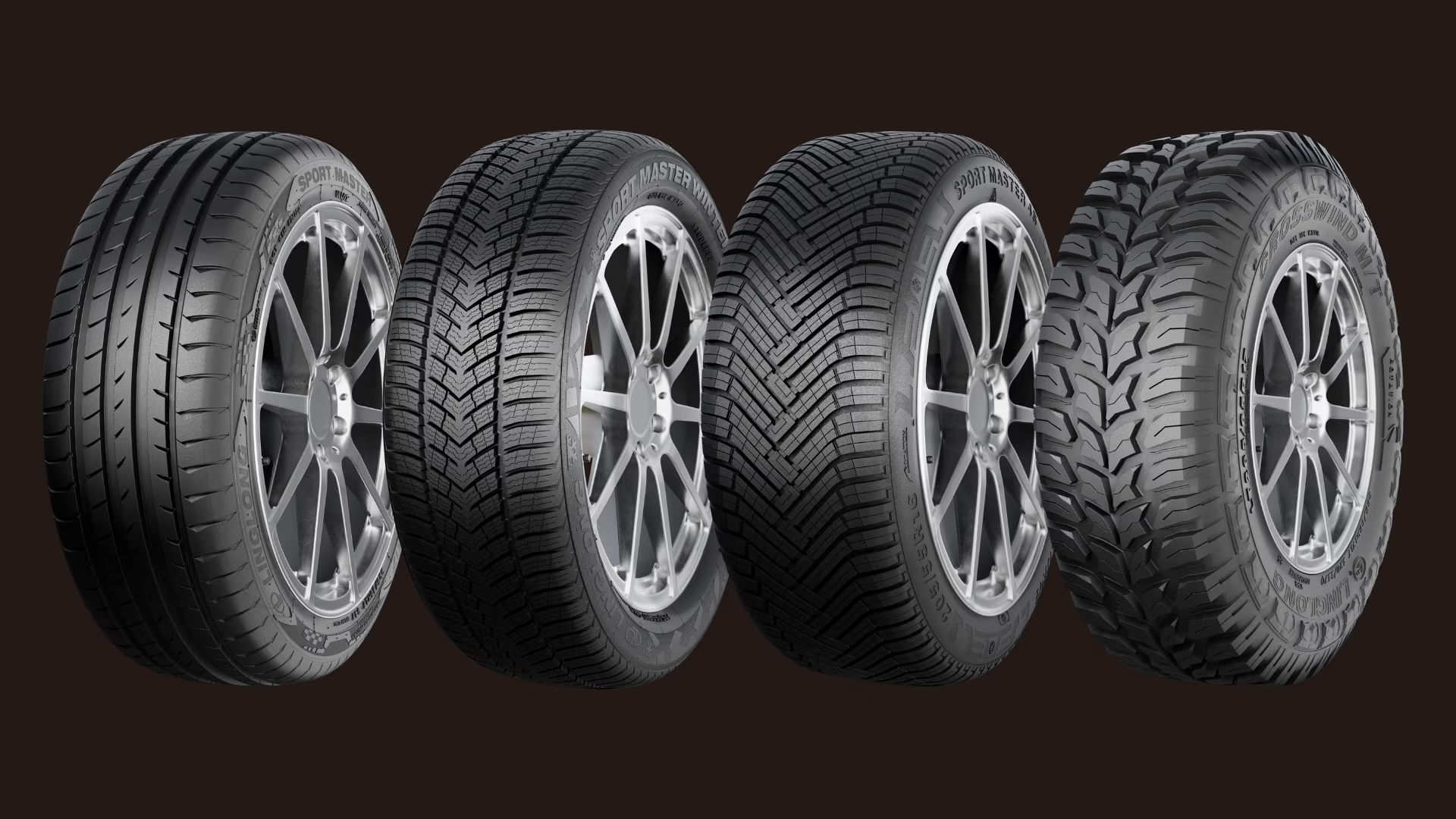
We provide an overview of the most important tire types, explaining their distinguishing features and suitable applications.
Summer tires
Optimal Performance in Warm Temperatures
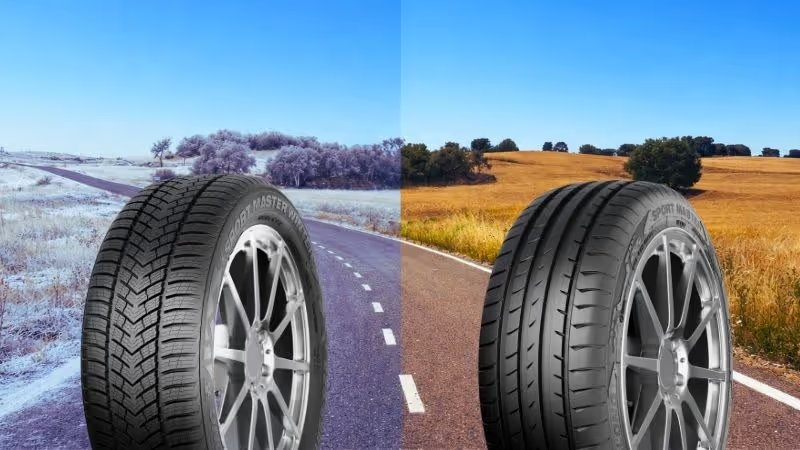
Summer tires are specifically designed for use in higher temperatures. Their rubber compound remains stable even at high temperatures, ensuring reliable grip on dry and wet roads. The result is precise steering, short braking distances, and a high degree of driving stability.
Thanks to reduced rolling resistance, summer tires also contribute to improved fuel efficiency and pleasantly quiet road noise. The comparatively simple tread design with fewer grooves maximizes the contact patch on the road, supporting safe driving in summer.
However, at low temperatures, the rubber compound of summer tires loses its flexibility, making them unsuitable for winter road conditions.

Winter tires
Safety in Cold, Snow, and Ice
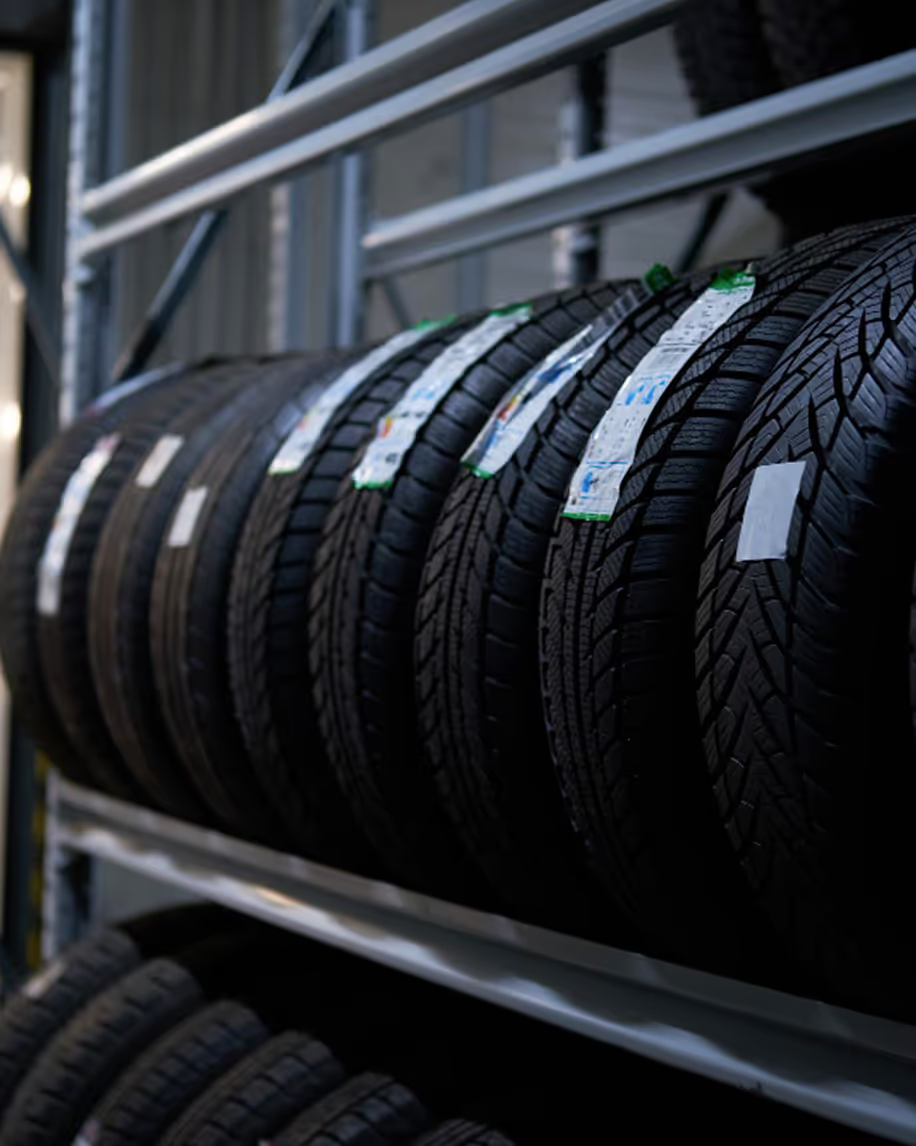
Winter tires are designed for cold weather conditions and offer high performance even at low temperatures. Their special, elastic rubber compound ensures that the tires remain flexible and provide optimal grip even on snow or ice. The pronounced tread with deep grooves and numerous sipes improves traction, as the tire interlocks better with the surface. This shortens braking distances and increases vehicle control in winter road conditions. In warm weather, however, winter tires are less efficient, as rolling resistance increases and wear significantly accelerates.

All-season tires
Flexible on the Road All Year Round
All-season tires combine the characteristics of summer and winter tires, offering a practical solution for drivers who primarily drive in moderate weather conditions. They allow for year-round use without seasonal tire changes. However, all-season tires are always a compromise: in extreme summer or winter conditions, they do not achieve the performance of specialized seasonal tires.

Run-flat tires
Stay Mobile Even with Air Loss
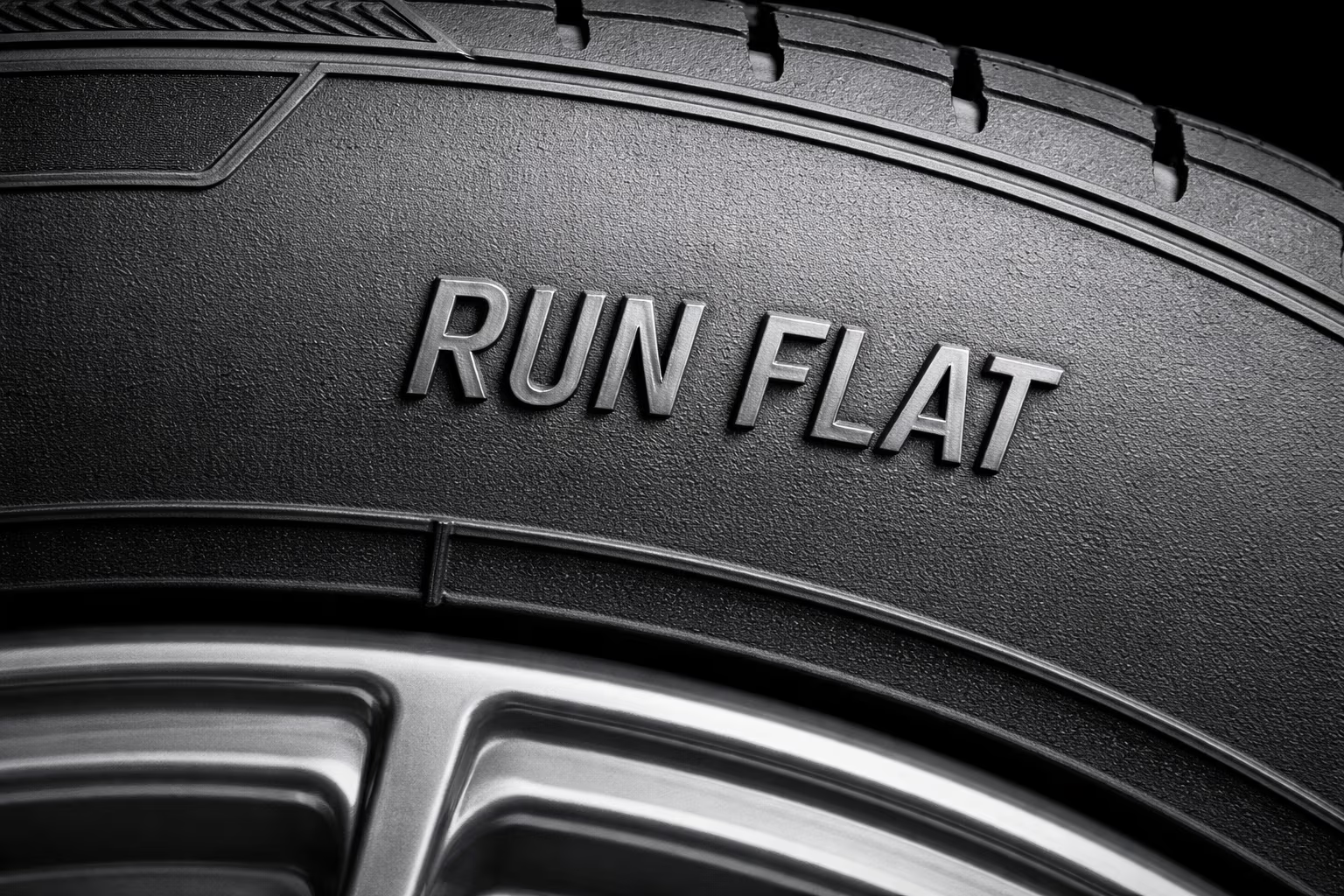
Run-flat tires, also known as self-supporting tires, offer an additional safety advantage. Even with a sudden loss of pressure, the vehicle remains drivable, allowing for a controlled journey to the nearest workshop.
This is made possible by reinforced sidewalls that support the vehicle’s weight even without air pressure. Typically, a damaged run-flat tire can still cover a distance of up to 80 kilometers. Nevertheless, for safety reasons, these tires should be replaced as soon as possible in the event of a puncture.
Off-road tires
Maximum Traction Off-Road
Off-road tires are specifically designed for use away from paved roads. Their aggressive tread pattern with large tread blocks and deep grooves ensures excellent traction on mud, grass, snow, or loose surfaces. Compared to conventional road tires, off-road tires clog less quickly, providing better grip and control even in challenging conditions – ideal for SUVs, all-terrain vehicles, and demanding applications.

Conclusion: The right tire choice determines safety and driving comfort
Whether summer, winter, all-season, or special tires – choosing the right tire directly impacts safety, efficiency, and driving behavior. By adapting your tires to the specific operating conditions, you benefit from optimal performance and a high degree of control.