What is the EU tyre label
The EU tyre label is mandatory for all tyres sold within the European Union. The purpose of the label is to provide consumers and fleet operators with transparent, objective, and comparable information regarding tyre performance. The focus is on safety, fuel efficiency, and noise levels.
What information does the EU tyre label provide
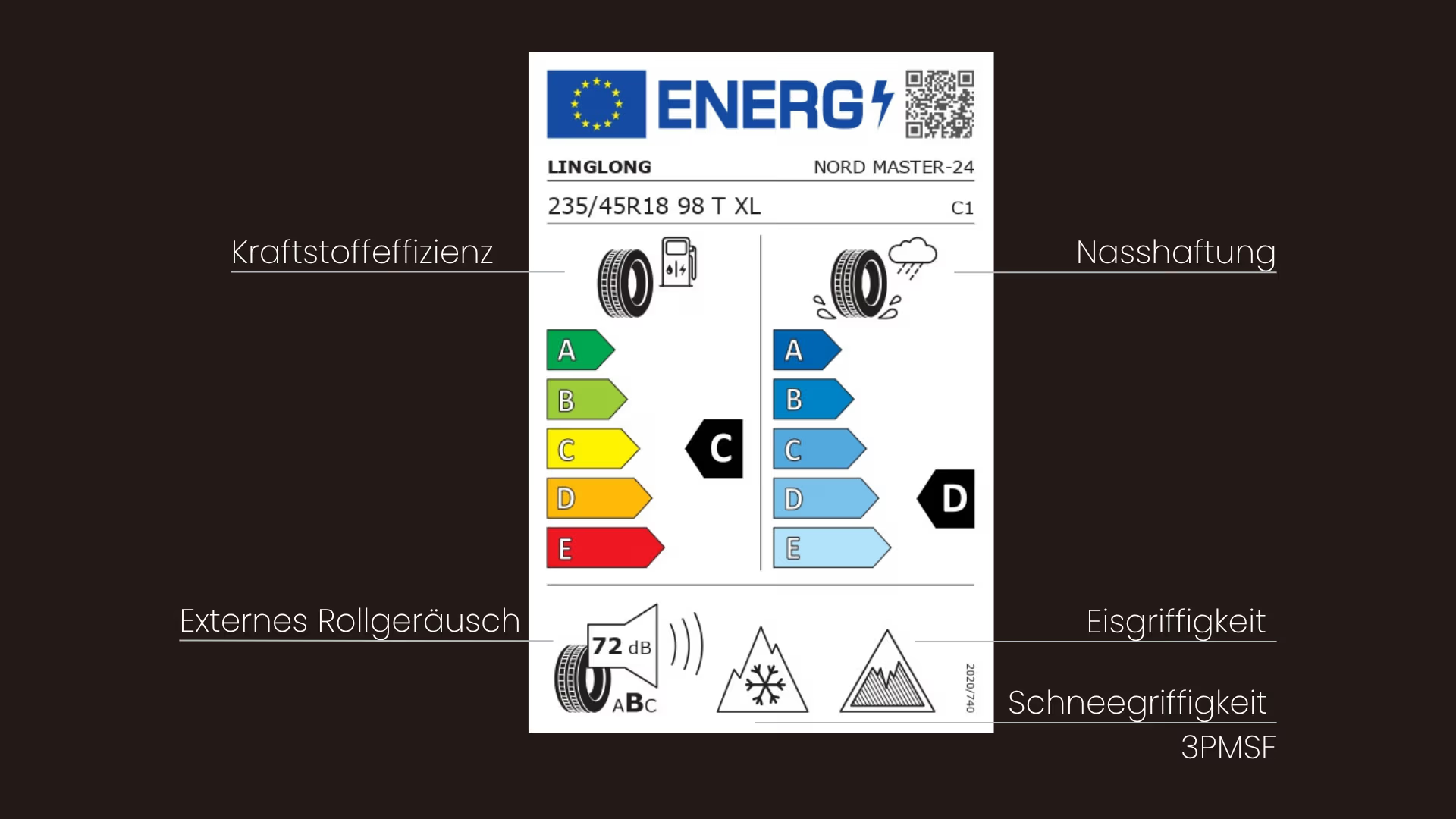
The EU tyre label evaluates three key performance characteristics of a tyre. These criteria are just as relevant for purchasing decisions as they are for the economical and environmentally conscious operation of a vehicle.
Wet grip and safety in the rain
Wet grip describes how well a tyre brakes on wet roads. It is rated in performance classes from A (good) to E (poor). Tyres with high wet grip offer shorter braking distances and thus contribute significantly to road safety. Especially in the rain, this value is one of the most important safety factors.
Fuel efficiency and rolling resistance
The fuel efficiency of a tyre depends directly on its rolling resistance. The lower the rolling resistance, the less energy is converted into heat as the tyre rolls. This lowers fuel consumption and reduces CO2 emissions. Here, too, the classification is made in quality classes from A to E. Especially for commercial vehicles and for all high-mileage drivers, an efficient tyre has a significant impact on operating costs.
External rolling noise
External rolling noise indicates how loud a tyre is while driving. It is measured in decibels and additionally categorized into classes A to C. A low noise level reduces noise pollution for both the environment and other road users, and is particularly relevant in urban areas.
Winter tyre marking with snowflake and ice grip
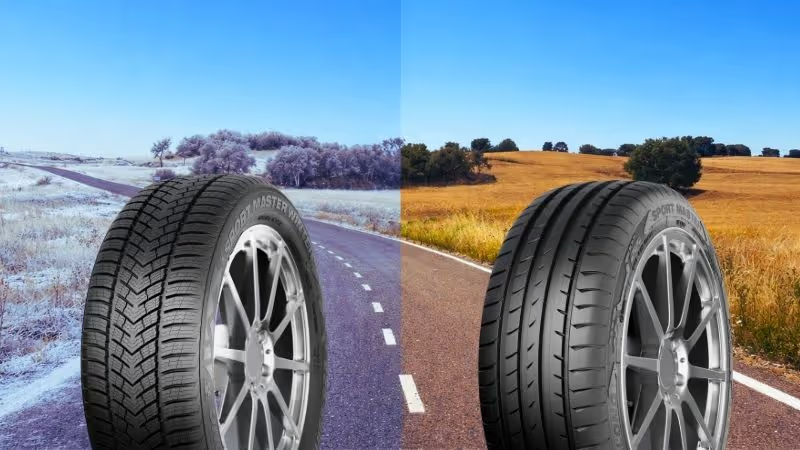
In addition to the standard information, the EU tyre label contains additional pictograms for winter conditions. The snowflake symbol identifies winter and all-season tyres that have demonstrated sufficient performance in defined winter tests.
A special symbol for ice grip is only awarded to selected passenger car winter tyres. These tyres are designed for extreme winter conditions with ice and hard-packed snow. Their use is recommended primarily in very cold regions. In moderate winters, using such tyres can entail several disadvantages.
Why rolling resistance affects consumption
As a tyre rolls, it constantly deforms, converting kinetic energy into heat, which is then unavailable for propulsion. Tyres with low rolling resistance minimize this energy loss. Since tyres can influence up to 30 percent of a vehicle's fuel consumption, choosing an efficient model plays a central role in consumption and costs.
EU tyre label as a decision-making aid
The EU tyre label helps drivers and fleet managers select tyres based on specific safety, consumption, or noise criteria. However, the label values do not replace a realistic assessment of operating conditions. Factors such as weather, driving style, load, and vehicle type continue to have a major influence on consumption and driving safety.
Tips for greater efficiency and longer tyre life
An adapted driving style reduces fuel consumption and increases the lifespan of your tyres. Regularly checking tyre pressure is just as important as accelerating smoothly and braking with foresight. Unnecessary weight in the vehicle also has a negative impact on consumption. Those who take these points into account make the most of the potential of modern tyres and drive more safely and economically.