1. Winter tire symbol
The Alpine symbol (3PMSF) – Maximum safety in winter
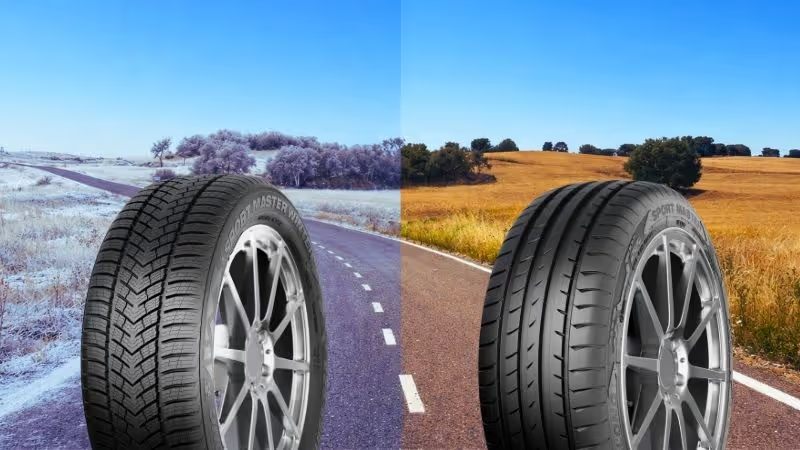
The pictogram featuring a snowflake inside a three-peaked mountain (Three-Peak Mountain Snowflake) is the only legally binding seal for genuine winter and all-season tires. It guarantees that the tire has passed strict, standardized tests on snow and ice.
Unlike the outdated "M+S" mark, this symbol gives you the assurance that your tire meets genuine international top-tier standards for winter road conditions. All winter tires in our MASTER family carry this symbol for your maximum protection.
2. Tire width
The first number describes the width of the tire. In this case, it measures 255 millimeters from sidewall to sidewall.
3. Aspect ratio
The following number indicates the ratio of the sidewall height to the tire width. A value of 45 means that the height of the sidewall is 45 percent of the width.
4. Construction type
This is followed by a letter. It indicates the construction of the tire. The R stands for radial construction, which is the standard for road traffic today. In this design, the cord plies in the carcass run at a right angle to the direction of travel. Bias-ply tires are rarer and are marked with a B or D.
5. Rim diameter
The number 19 indicates the diameter of the rim in inches on which the tire is mounted.
6. Load index
This is followed by the load index. The number 104 represents the maximum load the tire can carry at the correct tire pressure. Each index value is strictly defined. Corresponding tables can be found in your vehicle documents or from the tire manufacturer.
7. Speed index
The speed index concludes the sequence. The letter W indicates a maximum permissible speed of 270 kilometers per hour at full load. Regardless of this, legal speed limits naturally still apply.
8–10 Further markings
Additional information may also appear on the sidewall. This includes details on run-flat properties, original equipment for specific vehicle manufacturers, suitability for mud and snow, and approval according to US regulations. The production week and year are also noted. This information helps to correctly determine the age and intended use of the tire.
8. DOT marking
Confirmation that the tire meets the safety requirements of the U.S. Department of Transportation and is approved for use there.
9. Production week
Indicates the calendar week in which the tire was manufactured.
10. Production year
Shows the year of production and allows for precise determination of the tire's age.